M.Sc. Yoga Therapy
Bridging Classical Yogic Wisdom and Modern Healthcare for Holistic Well-being
The M.Sc. in Yoga Therapy at Sri Sri University combines classical yoga with biomedical sciences to develop research-oriented and clinically skilled Yoga Therapists. This two-year program prepares graduates for roles in healthcare, wellness, and integrative medicine.
Admissions Open 2026-27
M.Sc. in Yoga Therapy at Sri Sri University
Gurudev Sri Sri Ravi Shankar views Yoga as a holistic science for health, balance, and societal harmony. The M.Sc. in Yoga Therapy at Sri Sri University reflects this vision by integrating classical yogic wisdom with modern biomedical sciences. This two-year, four-semester postgraduate program prepares competent, research-oriented, and clinically skilled Yoga Therapists. The curriculum enables graduates to contribute to integrative health and wellness systems, as well as the expanding field of integrative medicine in India and internationally.

Specialised areas include
The programme provides advanced learning areas to address current healthcare challenges through Yoga Therapy and integrative wellness approaches.
- Yoga Therapy for lifestyle and psychosomatic disorders
- Yoga Therapy for neuropsychological and mind-body conditions
- Neuroscience of meditation and consciousness
- Yogic counselling and applied mind-body interventions
- Therapeutic nutrition and Yogic dietetics
- Clinical assessment and therapeutic sequencing
- Rehabilitation and pain management approaches
- Public health and community wellness applications
- Integrative healthcare approaches involving Ayurveda and Naturopathy
- Evidence-based research methodology and biostatistics
- Applied Yoga teaching and therapeutic delivery
This multidisciplinary curriculum enhances academic depth and practical relevance for today’s healthcare environments.


Students will receive exposure to
The programme emphasises practical experience and applied therapeutic learning through structured academic and clinical components.
- Supervised clinical internship and therapeutic observation
- Case-based Yoga Therapy training
- Clinical assessment and outcome evaluation approaches
- Therapeutic sequencing for various health conditions
- Applied Yoga teaching and practical delivery methods
- Research methodology, dissertation guidance, and academic mentorship
- Integrative healthcare exposure involving Yoga, Ayurveda, and wellness sciences
- Interdisciplinary interaction with health, wellness, rehabilitation, and preventive healthcare domains
The programme’s practical focus is designed to build professional confidence and therapeutic competence.

Growing scope includes
Yoga Therapy is increasingly recognised worldwide as a key component of integrative, preventive, and lifestyle-based healthcare.
- Increasing demand for integrative healthcare professionals
- Expanding role of Yoga Therapy in preventive and lifestyle medicine
- Application in stress management and mental wellness
- Supportive role in rehabilitation and chronic disease management
- Integration into wellness, public health, and community healthcare initiatives
- Growing research interest in mind-body medicine and evidence-based Yoga interventions
- Rising opportunities in hospitals, wellness centres, educational institutions, and healthcare organisations
The programme prepares students for this evolving healthcare landscape through interdisciplinary and research-focused training.

Students will develop
The programme develops academic knowledge and professional skills needed for modern Yoga Therapy and integrative healthcare practice.
- Clinical understanding of Yoga Therapy applications
- Therapeutic protocol design and sequencing skills
- Research literacy and evidence-based practice competencies
- Understanding of integrative healthcare systems
- Assessment and observation skills for therapeutic settings
- Communication and counselling-oriented competencies
- Applied teaching and therapeutic delivery abilities
- Leadership and wellness entrepreneurship orientation
- Ethical and professional practice awareness
- Interdisciplinary exposure to health and wellness sciences
The programme cultivates competent, research-oriented, and ethically grounded Yoga Therapy professionals.

Academic environment highlights
The programme is supported by an interdisciplinary academic environment that provides students with broad exposure to Yoga, wellness sciences, and integrative healthcare.
- Faculty expertise from Yoga, Naturopathy, Physiotherapy, Allied Health, and Wellness disciplines
- Research-oriented academic mentorship and guidance
- Interdisciplinary teaching-learning environment
- Clinical and practical orientation in therapeutic applications
- Exposure to evidence-based and integrative healthcare perspectives
- Holistic academic framework combining classical knowledge and contemporary sciences
Students benefit from a multidisciplinary environment that fosters academic excellence and professional development.

Key training components
The programme includes structured research and practical training to strengthen clinical understanding and evidence-based practice.
- Structured dissertation and research work
- Research methodology and biostatistics training
- Evidence-based Yoga Therapy orientation
- Clinical case discussions and therapeutic analysis
- Practical assessment and therapeutic planning exposure
- Outcome evaluation methods in Yoga Therapy
- Applied Yoga teaching and therapeutic delivery
- Mandatory supervised clinical internship
These components help students build practical competence, research skills, and professional readiness in Yoga Therapy and integrative healthcare.

Eligibility & Selection
*Fees such as Admission, Caution Money, Examination, Hostel, and Transport fees are extra.
Everything You Will Learn, in One View
Core Subjects
Yoga Therapy integrated with biomedical sciences, clinical assessment, research methodology and biostatistics
Specialised Areas
Lifestyle and psychosomatic disorders, mind-body conditions, therapeutic nutrition, rehabilitation and pain management
Skill Training
Case-based training, therapeutic sequencing, structured dissertation and a supervised 3-month clinical internship
Outcome
Clinical Yoga Therapist, integrative wellness consultant, researcher or academic in integrative healthcare
What Makes This Programme Stand Out
Built with Industry, for Industry
Biomedical & Yogic Integration
Integration of classical yogic knowledge and biomedical sciences for the Master of Science in Yoga Therapy
Clinical Assessment
Clinical assessment and case-based therapeutic design
Research & Biostatistics
Evidence-based research methodology and biostatistics
Integrative Health Sciences
Integrative health sciences, including Ayurveda, Naturopathy, and evidence-based yoga therapy practices
Supervised Clinical Training
Structured dissertation and supervised clinical internship in Yoga Therapy
Why Choose the M.Sc. Yoga Therapy at Sri Sri University?

Future-Focused Education
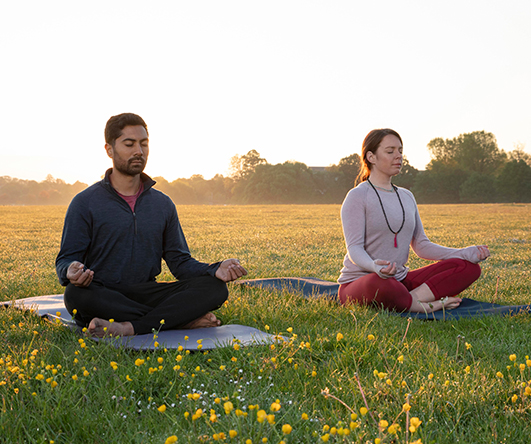
The M.Sc. Yoga Therapy programme at Sri Sri University offers a future-focused education at the intersection of Yoga, integrative healthcare, and biomedical sciences. It prepares professionals for the growing fields of preventive, therapeutic, and holistic healthcare by combining classical Yogic wisdom with modern biomedical knowledge, providing a solid foundation for evidence-based practice.
Immersive Clinical & Practical Learning
Beyond academics, the programme provides immersive learning through clinical exposure, supervised internships, case-based training, research, and interdisciplinary healthcare integration. Students develop practical skills in Yoga Therapy, clinical assessment, therapeutic sequencing, rehabilitation, wellness promotion, and integrative health, preparing them for roles in hospitals, wellness centres, academia, public health, and rehabilitation.
NEP 2020 & UGC LOCF Aligned Curriculum
The curriculum aligns with NEP 2020 and UGC LOCF standards, covering lifestyle disorder management, psychosomatic health, Yogic counselling, therapeutic nutrition, public health, and integrative wellness sciences. The programme also emphasises ethics, research literacy, evidence-based practice, and leadership.
Mentorship & Interdisciplinary Learning
Mentorship from experienced faculty and interdisciplinary learning guide students to become competent, compassionate, and innovative Yoga Therapy professionals who contribute to modern healthcare and societal well-being.
Strong Foundation for Long-Term Growth
For those seeking a dynamic and impactful career in Yoga Therapy and integrative healthcare, this programme offers a strong academic and clinical foundation for long-term professional growth.
Careers You Can Step Into
Graduates of the M.Sc. Yoga Therapy programme can pursue diverse careers in healthcare, wellness, research, academia, and integrative medicine.
Potential Career Roles
Career Opportunities May Be Available In
Independent wellness and therapeutic practice
What You Will Achieve
Personalized Therapeutic Design
Graduates will
Holistic Wisdom & Science
Integrate Yogic wisdom with biomedical understanding, central to holistic health education
Multi-Disciplinary Career Readiness
Be equipped for clinical, research, and teaching roles in integrative medicine, Yoga Therapy colleges, and wellness centres
Leadership & Entrepreneurship
Cultivate leadership and entrepreneurship in wellness sectors
Professional & Evidence-Based Ethics
Demonstrate ethical professionalism and evidence-based practice
Mind-Body Neurobiology
Apply modern psycho-neuro-immunology concepts to enhance stress resilience and psychosomatic recovery through targeted yogic practices.
Got Questions? We Have Answers
Everything you need to know about the M.Sc. in Yoga Therapy at Sri Sri University.
What is the duration of the M.Sc. Yoga Therapy programme?
The M.Sc. Yoga Therapy programme at Sri Sri University is a 2-year full-time postgraduate course with 4 semesters, including coursework, clinical training, research, and internship.
What is the eligibility criteria for admission to M.Sc. Yoga Therapy?
Candidates with a Bachelor’s degree (minimum 3 years) in Yoga, AYUSH, Medical, Allied Health, Life Sciences, Biomedical Sciences, Behavioural Sciences, Social Sciences, Educational Sciences, or other recognised disciplines may apply, subject to the University’s minimum eligibility requirements.
Is prior Yoga experience mandatory for admission?
Formal Yoga qualifications are not required. However, demonstrated aptitude, interest, and commitment to Yoga, health sciences, and integrative wellness are preferred.
What is the admission process for the programme?
dmission to the M.Sc. Yoga Therapy programme is based on: • Academic merit • Personal interview • Statement of Purpose (SOP) as per University guidelines.
Is the programme aligned with NEP 2020 and UGC guidelines?
Yes. The programme is designed in alignment with NEP 2020, UGC Learning Outcomes-Based Curriculum Framework (LOCF), and contemporary integrative healthcare education standards.
What subjects are covered in the M.Sc. Yoga Therapy curriculum?
The curriculum includes: • Classical Yoga and Yogic Philosophy • Human Anatomy & Physiology • Yogic Physiology • Yoga Therapy for lifestyle and psychosomatic disorders • Research Methodology & Biostatistics • Yogic Counselling • Therapeutic Nutrition • Public Health and Community Wellness • Ayurveda and Naturopathy foundations • Clinical assessment and therapeutic sequencing • Integrative and evidence-based Yoga Therapy approaches
Does the programme include clinical training and internship?
Yes. The programme includes supervised practical and clinical training along with a mandatory 3-month clinical internship, providing exposure to Yoga Therapy and integrative health sciences including Ayurveda and Naturopathy.
Does the programme include research and dissertation work?
Yes. The programme includes structured dissertation work, research methodology training, biostatistics, ethics, and evidence-based research components.
What skills will students develop during the programme?
Students will develop competencies in: • Clinical assessment • Therapeutic Yoga protocol design • Integrative healthcare approaches • Research literacy and evidence-based practice • Therapeutic sequencing • Communication and counselling • Public health and wellness applications • Professional and ethical practice
What are the career opportunities after completing M.Sc. Yoga Therapy?
Graduates may pursue opportunities in: • Clinical Yoga Therapy • Integrative healthcare and wellness centres • Hospitals and rehabilitation settings • Research and academic institutions • Public health and community wellness programmes • Corporate wellness • Wellness entrepreneurship • Teaching and higher research pathways
What makes the M.Sc. Yoga Therapy programme unique?
The programme integrates classical Yogic wisdom with modern biomedical sciences through: • Evidence-based curriculum • Clinical and therapeutic orientation • Interdisciplinary integrative healthcare exposure • Research and dissertation training • Public health integration • Structured internship and practical learning • Ayurveda and Naturopathy exposure
Does the programme include exposure to Ayurveda and Naturopathy?
Yes. The curriculum includes integrative health sciences exposure through foundational learning in Ayurveda and Naturopathy, along with Yoga Therapy applications.
What are the major clinical areas covered in Yoga Therapy training?
Students receive exposure to Yoga Therapy approaches for: • Lifestyle disorders • Musculoskeletal conditions • Psychosomatic disorders • Neuropsychological conditions • Stress-related disorders • Rehabilitation and pain management • Preventive and wellness-oriented healthcare
Can international students apply for the programme?
Yes. International students with equivalent qualifications recognised by competent authorities may apply, subject to the fulfilment of University and regulatory requirements.
What is the total number of credits in the programme?
The programme comprises 84 academic credits over four semesters.
Is the internship mandatory?
Yes. The 3-month supervised clinical internship is a mandatory component of the M.Sc. Yoga Therapy programme.
What is the scope of Yoga Therapy in integrative healthcare?
Yoga Therapy is an emerging field within preventive, promotive, and integrative healthcare. Increasing opportunities exist in hospitals, wellness centres, rehabilitation settings, mental health support, lifestyle disease management, community wellness, research, and public health sectors.
Which university offers the M.Sc. Yoga Therapy programme?
The M.Sc. Yoga Therapy programme is offered by Sri Sri University under the Faculty of Health & Wellness.
Hear From Our Yoga Therapy Students
Real Experiences
“The Bachelor of Physiotherapy course at Sri Sri University transformed my practical skills and confidence. The world-class labs and clinical internships in Cuttack and Bhubaneswar made learning engaging and hands-on!”

“The faculty’s mentorship and focus on holistic development helped me excel academically and personally. I highly recommend Sri Sri University as the best college for Physiotherapy in Odisha.”
Yoga Therapy Graduates
Building Careers in India and Abroad
“After graduating from the Bachelor of Physiotherapy programme at Sri Sri University, I secured a position at a renowned hospital in Bhubaneswar. The clinical training and research opportunities were second to none. Today, I’m pursuing specialisation and consulting internationally.”

“My journey at Sri Sri University gave me the confidence and skills to set up my own physiotherapy clinic in Cuttack. The support from faculty and practical exposure shaped my career path for success.”
